Paris in late March has a rhythm all its own. The winter chill begins to soften, the daylight lingers longer in the evenings, and the city seems to hum with a renewed sense of possibility. I found myself walking along the Seine with a scarf loosely wrapped around my neck, noticing how the pale blossoms on the trees echoed the delicate pastels of Impressionist paintings. It was the perfect season to lose myself in museums, where centuries of art and history converge.
This journey was not about rushing through the obvious checklist but about immersing myself—lingering in front of masterpieces, discovering overlooked corners, and feeling how each museum reflected Paris itself: bold, complex, and endlessly beautiful.
The Louvre Museum – Rue de Rivoli, 75001 Paris
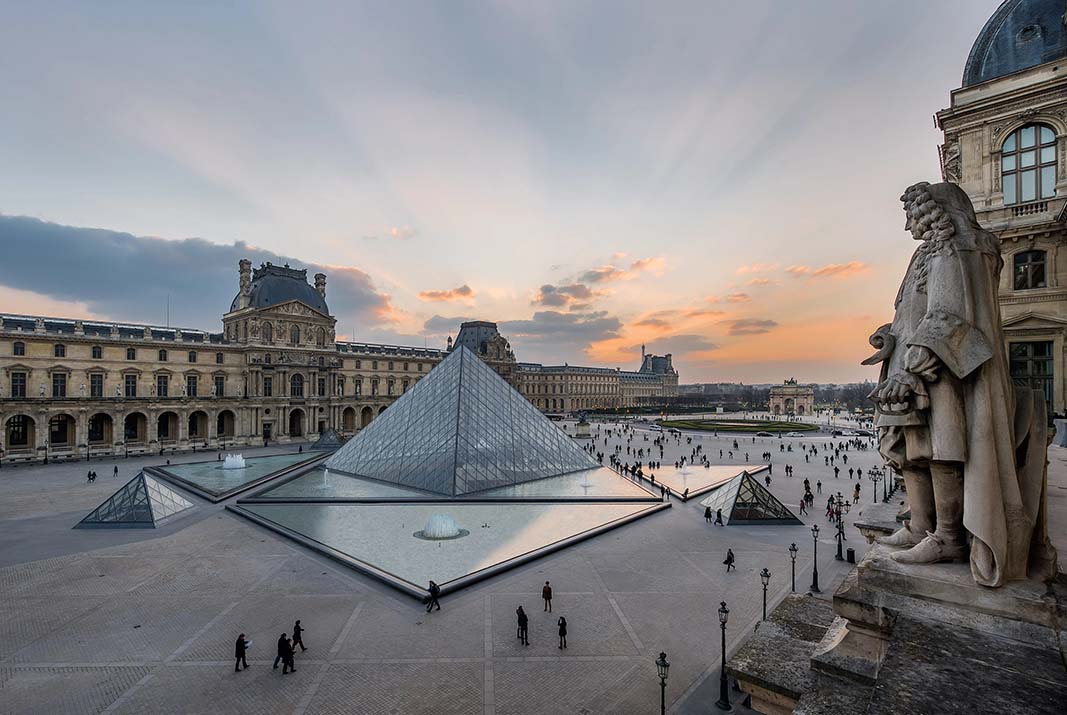
The Louvre is more than a museum—it is a universe in its own right. Walking across the Cour Napoléon and stepping through the glass pyramid entrance, I felt dwarfed by its immense scale. The buzz of visitors from every corner of the world mixed with the quiet anticipation of entering a palace that has housed kings, emperors, and now, priceless art. Even before reaching the galleries, the architecture struck me deeply: vast courtyards, gleaming marble staircases, and the elegant dialogue between the old palace walls and I. M. Pei’s daring glass pyramid.
I made my way straight to the Denon Wing, where the Mona Lisa hangs. The crowd was dense, phones raised in unison, yet even from several meters away, her mysterious gaze seemed intimate, as if directed solely at me. Still, what I loved most about the Louvre was wandering beyond the famous. The Winged Victory of Samothrace, poised triumphantly at the top of a grand staircase, was breathtaking—the way the marble folds of her gown seemed to ripple in an invisible wind left me frozen in admiration.
Around each corner, treasures waited: ancient Egyptian sarcophagi, French Romantic canvases, delicate Islamic ceramics. The Louvre isn’t a single museum; it is a labyrinth of civilizations, an endless story of humanity told through stone, canvas, and bronze.
- Location: Rue de Rivoli, central Paris.
- Ticket Costs: Around €17 for general admission.
- Booking Platforms: I reserved through Tiqets.com, which sent me a mobile ticket, saving me from the long ticket counter lines. I also noticed GetYourGuide offered skip-the-line tours with guides.
- Tips: Choose a weekday morning. Wear comfortable shoes—the galleries stretch endlessly. And don’t try to “see it all.” Instead, select a few sections and allow yourself time to absorb them.
Leaving the museum at sunset, the glass pyramid shimmered in golden light, as if the entire courtyard had transformed into a stage set for history itself.
Musée d’Orsay – 1 Rue de la Légion d’Honneur, 75007 Paris
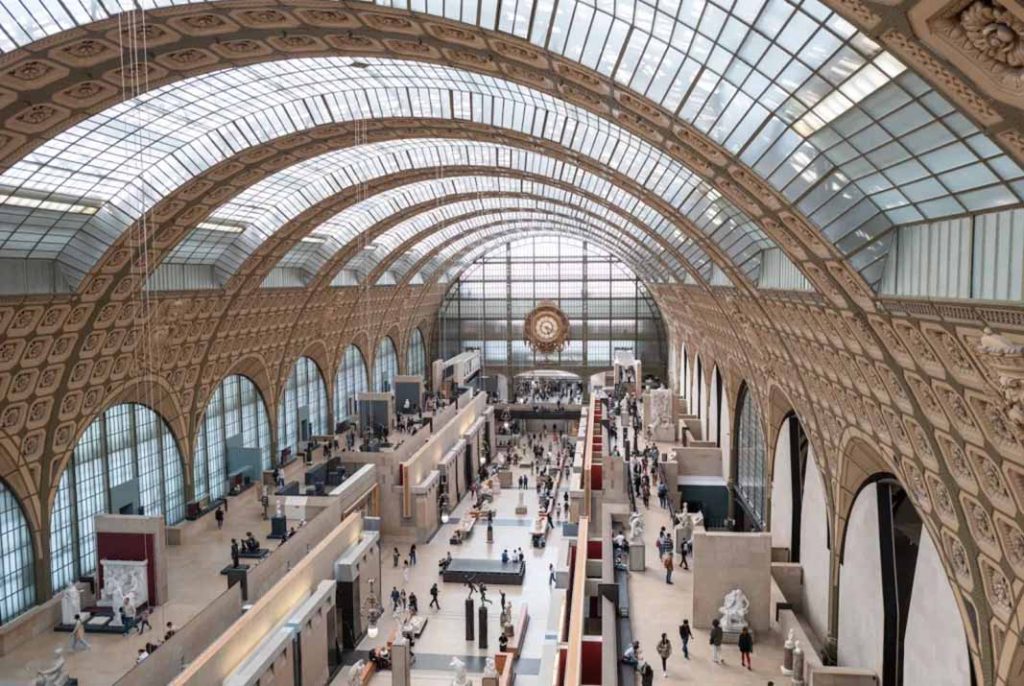
Crossing the Seine from the Louvre, I found myself in a former train station reborn as one of the most inspiring museums in Paris: the Musée d’Orsay. Its glass roof bathed the vast central hall in natural light, and the great clock still overlooked the city from its perch.
The museum is a cathedral to Impressionism. I wandered from one familiar painting to another—Monet’s water lilies, Renoir’s dances, Van Gogh’s self-portraits. Standing before Van Gogh’s “Starry Night Over the Rhône”, I felt a quiet intimacy. The brushstrokes seemed alive, shimmering as though reflecting the river outside.
- Location: 1 Rue de la Légion d’Honneur, on the Left Bank.
- Ticket Costs: General admission around €16. Reduced fares for students and free entry on the first Sunday of each month.
- Booking Platforms: I booked through Musee-Orsay.fr directly, but I also recommend Klook and Tiqets for combination tickets with the Orangerie.
- Tips: Arrive early or late afternoon to avoid peak hours. Take a break at the café under the museum’s massive clock—sipping coffee there felt like being inside a painting.
Walking out of Orsay, the late March air carried a hint of warmth. The Seine glistened, and I thought of the Impressionists painting plein air, capturing fleeting light just as I had experienced it.
Centre Pompidou – Place Georges-Pompidou, 75004 Paris
The Centre Pompidou stands out like no other. Its exposed pipes, bold colors, and modern design make it impossible to miss. At first, I hesitated, wondering if the building itself was more spectacle than substance, but once inside, I was swept away.
The Modern and Contemporary Art collection is astonishing. From Picasso’s cubism to Kandinsky’s abstractions and Warhol’s pop art, the galleries felt like a kaleidoscope of creativity. I was particularly moved by a room dedicated to Yves Klein, where the electric blue canvases seemed almost spiritual.
- Location: Place Georges-Pompidou, 4th arrondissement.
- Ticket Costs: About €14 for adults.
- Booking Platforms: Tickets on CentrePompidou.fr, but I preferred booking via GetYourGuide, which bundled entry with a guided tour of the Marais.
- Tips: Don’t miss the rooftop terrace for panoramic views of Paris, especially in the crisp March air.
Walking back through the Marais afterward, I stopped for falafel at L’As du Fallafel, combining modern art with local flavors.
Musée de l’Orangerie – Jardin des Tuileries, 75001 Paris
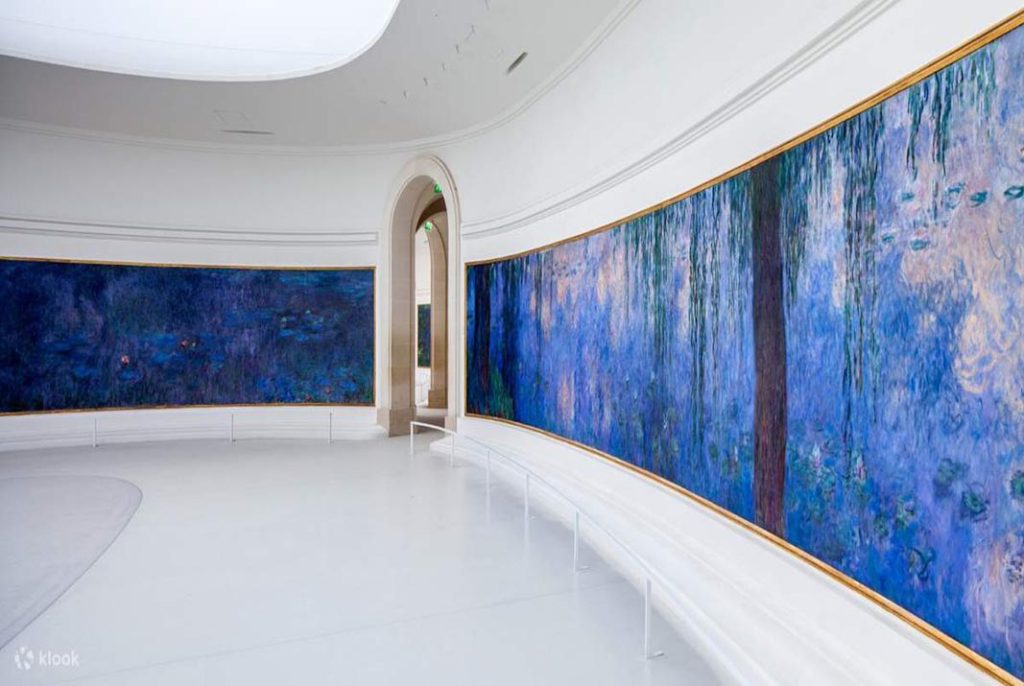
Hidden in the Tuileries Gardens, the Musée de l’Orangerie is a treasure chest of tranquility. The highlight, of course, is Monet’s Water Lilies. The two oval rooms designed to house these panels created an almost meditative space. Sitting on the bench in the center, surrounded by flowing blues, greens, and lilacs, I felt as though time had paused.
Beyond Monet, I discovered the Jean Walter and Paul Guillaume collection, which included Renoir, Cézanne, and Modigliani. It was less crowded than the Louvre or Orsay, and I cherished that sense of intimacy.
- Location: West end of the Tuileries Garden.
- Ticket Costs: About €12.50 for adults.
- Booking Platforms: I used Tiqets for a combo ticket with Orsay, which saved a few euros.
- Tips: Go in the morning, then stroll through the Tuileries afterward—it’s a perfect pairing.
Musée Rodin – 77 Rue de Varenne, 75007 Paris
March in Paris means gardens beginning to awaken, and the Musée Rodin’s sculpture garden was magical. Statues like The Thinker and The Gates of Hell stood against budding trees, their bronze surfaces gleaming in the cool light.
Inside the Hôtel Biron, I explored Rodin’s plaster casts, drawings, and personal collections. I loved discovering smaller, lesser-known pieces that showed his experimentation.
- Location: 77 Rue de Varenne, near Les Invalides.
- Ticket Costs: About €13.
- Booking Platforms: Directly on Musee-Rodin.fr, though Klook also offered skip-the-line passes.
- Tips: Visit on a mild day so you can enjoy both the museum and the gardens.
Petit Palais – Avenue Winston Churchill, 75008 Paris
The Petit Palais often feels like a hidden gem, overshadowed by its “Grand” neighbor. Yet inside, I found a surprisingly diverse collection—from Renaissance paintings to Art Nouveau furniture. Best of all, admission to the permanent collection is free.
The courtyard garden was a highlight. With its colonnades, mosaics, and fountains, it felt like a peaceful escape from the bustle of the Champs-Élysées just outside.
- Location: Near the Champs-Élysées, opposite the Grand Palais.
- Ticket Costs: Permanent collection free; temporary exhibitions priced separately.
- Tips: Pair your visit with a stroll down Avenue Montaigne for a taste of Parisian luxury.
Musée Picasso – 5 Rue de Thorigny, 75003 Paris
The Musée Picasso, located in a grand 17th-century hôtel particulier in the Marais, is dedicated entirely to the master of reinvention. Walking through the galleries, I felt immersed in Picasso’s restless creativity—from early sketches to sculptures, ceramics, and paintings.
What I loved most was the way the museum highlighted Picasso’s personal life—letters, photographs, and even furniture offered glimpses into his world.
- Location: 5 Rue de Thorigny, Le Marais.
- Ticket Costs: About €14.
- Booking Platforms: Available through Picasso-Paris.fr or GetYourGuide for guided tours.
- Tips: Combine this with a Marais neighborhood walk for a full day of art and culture.
Musée Carnavalet – 23 Rue de Sévigné, 75003 Paris
Dedicated to the history of Paris, the Musée Carnavalet is less famous but deeply rewarding. Exhibits cover everything from the French Revolution to Haussmann’s redesign of the city. I found myself captivated by original revolutionary pamphlets and Marie Antoinette’s personal belongings.
- Location: Le Marais.
- Ticket Costs: Free entry to the permanent collection.
- Tips: Ideal for history lovers wanting to understand Paris beyond its art.
Practical Notes for Booking and Travel
Throughout my museum journey, I discovered that planning ahead made all the difference:
- Tickets and Passes: Platforms like Tiqets, GetYourGuide, and Klook were invaluable for skip-the-line tickets and combination passes.
- Flights and Accommodation: I relied on Skyscanner for affordable flights and Booking.com for centrally located hotels near the Metro.
- Dining Reservations: TheFork (LaFourchette) made it easy to book bistros after long museum days.
By the time March gave way to April, my notebook was overflowing with sketches, impressions, and ticket stubs. Each museum had its own rhythm: the grandeur of the Louvre, the intimacy of the Orangerie, the boldness of the Pompidou, the calm of the Rodin gardens.
What struck me most was how deeply museums in Paris are interwoven into the fabric of the city. They’re not just places to view art but living spaces where past and present meet, where a visitor like me can lose hours and emerge transformed.
Walking back along the Seine one evening, street lamps flickering in the twilight, I felt grateful not just for the masterpieces I had seen but for the moments of quiet connection each museum offered. Paris, I realized, is itself the greatest museum of all—open-air, alive, and waiting to be explored.