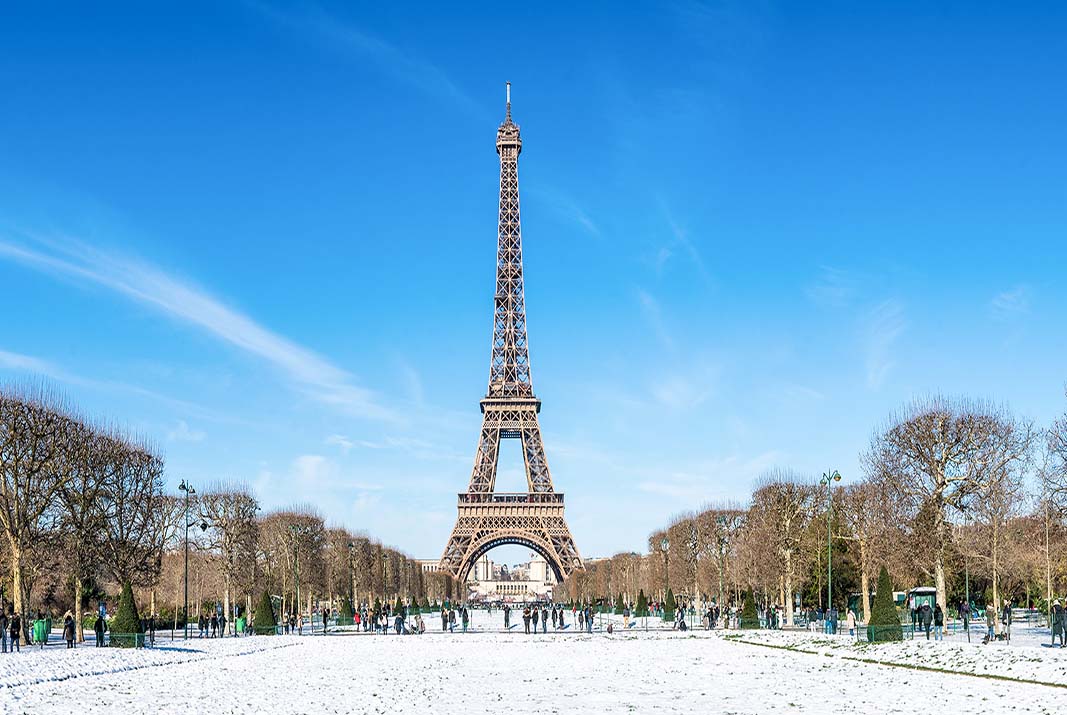
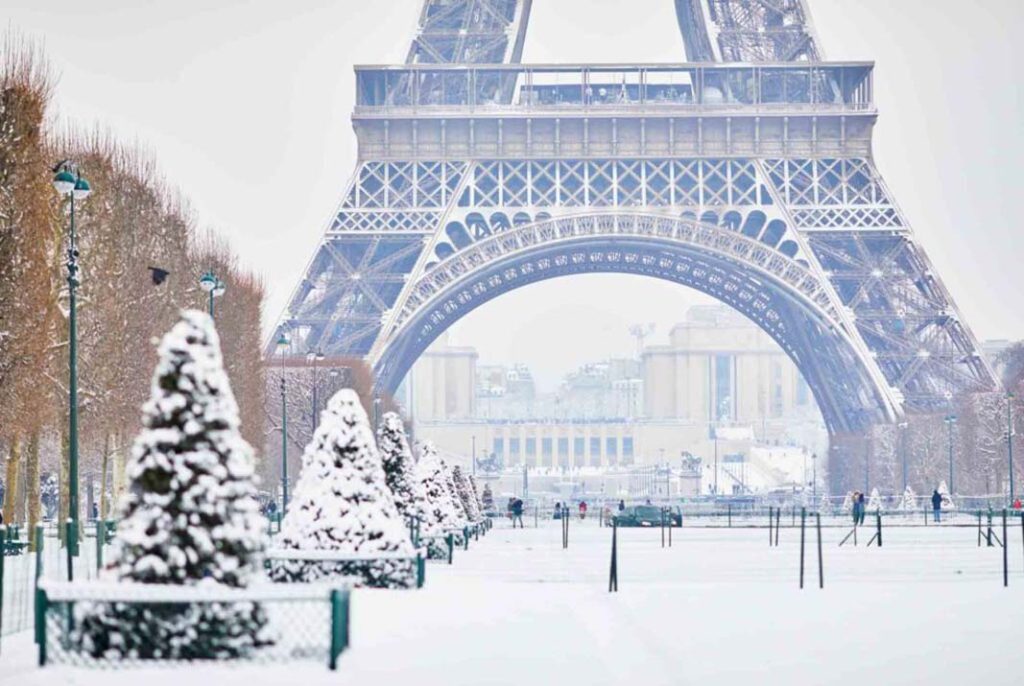
There is something about Paris in January that feels simultaneously serene and electrifying. The usual hum of tourists is quieter, replaced by the gentle crunch of snow beneath my boots as I walked through the Champ de Mars toward the Eiffel Tower. The city wore a winter cloak of misty mornings and chilly winds, yet the golden iron structure of the Eiffel Tower pierced through the gray sky, as if daring me to climb and see the city in all its frosty glory.
First Impressions: The Icon of Paris
As I approached the Eiffel Tower from Champ de Mars, the first thing that struck me was its sheer size. Rising to 330 meters, it dominates the Parisian skyline, yet somehow it never feels imposing. Instead, it feels inviting, almost like an old friend. I paused to take photographs from multiple angles: from Trocadéro Gardens across the river, where the reflection in the fountains added a magical winter glow, and from the base, where I marveled at the lattice work of iron beams, their geometric complexity a testament to Gustave Eiffel’s engineering genius.
The Tower is located in the 7th arrondissement, along Champ de Mars, 5 Avenue Anatole France. Its accessibility is excellent: I arrived via the Bir-Hakeim Metro Station (Line 6) and walked along the riverside, enjoying the quiet hum of winter Paris.
Planning the Climb
Climbing the Eiffel Tower requires some planning, especially in winter. The Tower has three levels accessible to visitors: the first and second floors by stairs or elevator, and the top floor via elevator only. During January, crowds are thinner, but weather conditions, such as icy steps or gusty winds, make it wise to purchase tickets in advance. I booked mine through Tiketmaster France and cross-checked availability on GetYourGuide.
- First Floor: Entry €12.50 by stairs, €16 by elevator
- Second Floor: Entry €17.50 by stairs, €23 by elevator
- Summit: €25.50 by elevator from the ground floor
- Booking Tip: Always book online to avoid queues, especially for summit access. During winter, check for any temporary maintenance closures.
The First Floor: History and Perspective
I chose to ascend the stairs to the first floor to acclimate and fully enjoy the journey upward. Each step revealed new angles of the iron latticework, intricate patterns I had previously only admired in photographs or postcards. The beams, rivets, and crisscrossing structures created a visual rhythm that was mesmerizing up close. Walking among them, I could almost feel the weight of history embedded in the iron, a silent testament to Gustave Eiffel’s audacious vision.
On this level, small exhibitions narrated the Tower’s storied past. Panels and displays detailed its construction in 1889 for the Exposition Universelle, explaining how it symbolized French innovation during the Industrial Revolution. I read accounts of Parisians’ initial skepticism—many considered it an eyesore—and contrasted that with the modern reverence the structure commands today. The exhibition also highlighted how the Eiffel Tower evolved over the decades, from a radio transmission hub to an emblem of artistic inspiration, which made me appreciate the monument not only as a tourist attraction but as a living piece of history.
The first floor also features transparent glass panels along the edges, creating vertiginous views of the Champ de Mars below. I crouched near the edge and looked down at the meticulously trimmed lawns, the walkways lined with leafless winter trees, and the occasional early morning jogger weaving through the frost-kissed grass. From this perspective, I realized the Tower isn’t just a monumental structure—it is intimately woven into the rhythm of Parisian daily life. Families, couples, and solo travelers alike moved through the park beneath, adding life to the geometric precision of the surrounding gardens.
This level offers a gentle introduction to the height and scale of the Tower while allowing visitors to pause, take photographs, and appreciate the surrounding cityscape before ascending further. I spent nearly an hour here, lingering by the windows, absorbing the mixture of cold air and excitement. The first floor’s combination of historical insight and panoramic vantage points made it an ideal starting point for my journey upward.
Second Floor: A Panoramic Marvel
The second floor is where the true magic of Paris unfolds, offering arguably the most captivating views of the city. From here, I could trace the Seine River as it snaked gracefully through the heart of the city, its icy banks reflecting the muted gray of the winter sky. To the west, the Trocadéro Gardens stretched out symmetrically, with the fountains and terraces creating a perfect photographic composition even without the summer water displays. To the east, the dome of Les Invalides shimmered faintly, its golden hues providing a warm counterpoint to the winter chill.
I spent a significant amount of time at this level, snapping photos and simply letting the cold breeze invigorate me. The combination of panoramic views, crisp air, and a sense of altitude made the experience both exhilarating and reflective. There are also dining options here, including Le 58 Tour Eiffel, where floor-to-ceiling windows allow diners to enjoy the sprawling cityscape while savoring French cuisine. Though the three-course meal at €75 per person felt luxurious, pairing the food with the sweeping views created a uniquely Parisian indulgence.
- Tip: To ensure a spot, especially in quieter winter months, reserve tables in advance through TheFork (LaFourchette) or TripAdvisor Dining. Visiting in January offers the advantage of less crowded conditions, making the experience more intimate and leisurely.
Summit: Touching the Sky
Reaching the summit required a short elevator ride from the second floor, an ascent that was smooth yet charged with anticipation. As the city stretched beneath me, it appeared as a living, breathing map, with streets, rooftops, and landmarks unfolding in every direction. At 330 meters, the view is unparalleled: I could see the Arc de Triomphe, Montmartre, Notre-Dame Cathedral, and Sacré-Cœur, each softened by the winter mist, giving the city a dreamlike quality.
I lingered at the top, letting the gusts of wind wash over me, each breath invigorating against the crisp January air. The cold accentuated the experience, making every detail of the skyline feel sharper and more vivid. Around me, other visitors shared in the awe: a group of tourists photographed each other laughing, a Parisian artist sketched the skyline with meticulous strokes, and couples held hands, mesmerized by the scene below. I felt a profound sense of connection, not only to the city but also to the countless travelers who had stood here before me, looking out over Paris and sharing in its beauty.
The summit experience is a delicate balance of exhilaration and reflection. The height can be intimidating, yet the views are calming, almost meditative. From this vantage point, one appreciates the Eiffel Tower not merely as an architectural marvel but as a lens through which the soul of Paris can be glimpsed.
Surrounding Attractions: Making the Most of Your Visit
The Eiffel Tower is not just a standalone experience; it’s surrounded by must-visit locations:
- Champ de Mars: The expansive park stretches southeast, offering perfect photo opportunities. Walking here in January, the bare trees cast dramatic shadows, and the frost on the grass sparkled in morning light.
- Trocadéro Gardens: Across the Seine, this area offers one of the most iconic photography spots of the Tower. Fountains may be less active in winter, but the symmetry and elegance are undiminished.
- Seine River Cruises: Companies like Bateaux Parisiens offer winter cruises. I opted for a midday cruise (€15-€20), providing stunning views of bridges and monuments with fewer crowds.
- Les Invalides: Just a short walk from the Tower, this site houses Napoleon’s tomb. Entry €14, and online booking through GetYourGuide ensures access without waiting.
Winter-Specific Tips
- Dress in Layers: January temperatures hover between 2°C and 8°C. Thermal layers, a warm coat, and gloves are essential.
- Book in Advance: Even with smaller crowds, winter closures or icy conditions can limit access.
- Photography: Early mornings offer soft light and fewer tourists. I found 8-10 am ideal for photography.
- Footwear: Cobblestones near Champ de Mars and surrounding streets can be slippery. Waterproof boots with good grip are a must.
- Restaurants: Many rooftop and nearby cafes reduce prices in winter, but indoor seating may be limited—book ahead.
Booking Essentials
I organize most of my Paris travel logistics through a combination of platforms:
- Flights: Skyscanner, Kayak, or airline websites. I flew from Berlin to Paris Charles de Gaulle in January for €120 round trip, booked two months ahead.
- Hotels: I prefer Booking.com and Expedia; both offer free cancellation and winter promotions. I stayed near École Militaire, a 10-minute walk from the Tower, at €140 per night for a double room.
- Restaurants: TheFork (LaFourchette) and TripAdvisor Dining for reservations.
- Tickets: GetYourGuide, Tiqets, or official Eiffel Tower website for summit tickets. Online booking avoids long lines and guarantees a time slot.
Personal Reflections
Standing atop the Eiffel Tower in January felt like discovering a secret side of Paris. The city was quieter, the air crisper, and the light softer than in high summer. I wandered the streets around the Tower for hours, capturing images of Pont d’Iéna, the riverside benches dusted with frost, and the faint glow of cafés preparing for lunch.
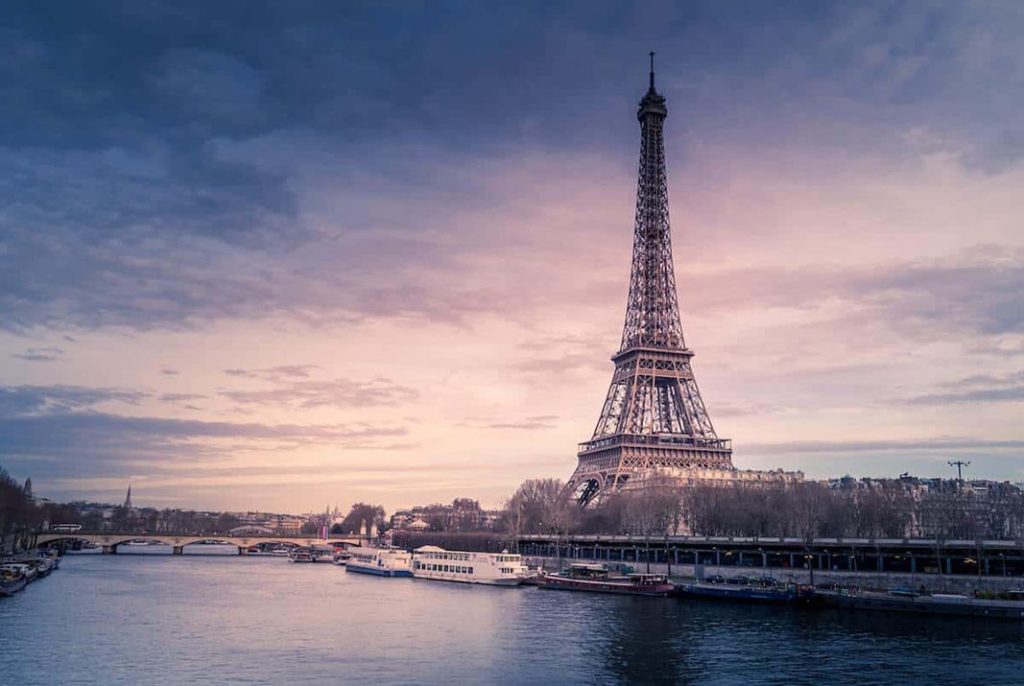
One particularly striking moment occurred as the sun dipped behind Montparnasse Tower. The sky transitioned from steel gray to muted amber, and the city lights twinkled on one by one. I sipped hot chocolate at a small café near Champ de Mars, watching Parisians and tourists alike pause to marvel at the iconic silhouette of the Tower against the evening sky.
Making the Experience Complete
To truly embrace the Eiffel Tower experience, I recommend combining it with nearby activities:
- Seine River Cruise: €15–€25; book via Bateaux Parisiens or GetYourGuide.
- Champ de Mars Photography Walk: Free; best at sunrise or sunset.
- Trocadéro Gardens Visit: Free; offers iconic photo angles.
- Nearby Cafés for Lunch/Dinner: Book via TheFork; enjoy winter comfort food like French onion soup or duck confit.
- Museums Nearby: Musée du Quai Branly (€12 entry) for indigenous art, just a 5-minute walk from the Tower.
Climbing the Eiffel Tower in January is an unparalleled experience. The combination of crisp winter air, fewer crowds, and serene city views allows a unique connection to Paris. Booking in advance for tickets, accommodations, and restaurants ensures smooth travel, while winter preparation—warm clothing, sturdy footwear, and online reservations—creates a seamless adventure.
Platforms like Skyscanner, Booking.com, GetYourGuide, Tiqets, and TheFork streamline the process, letting me focus on the city’s magic rather than logistics. From the frost-kissed Champ de Mars to the panoramic summit view, every moment of my visit was immersive, intimate, and unforgettable.
Standing atop the Tower, seeing Paris sprawled beneath me in winter, I understood why the Eiffel Tower remains a timeless symbol of wonder and possibility—a structure that invites you not only to look at the city but to feel it.